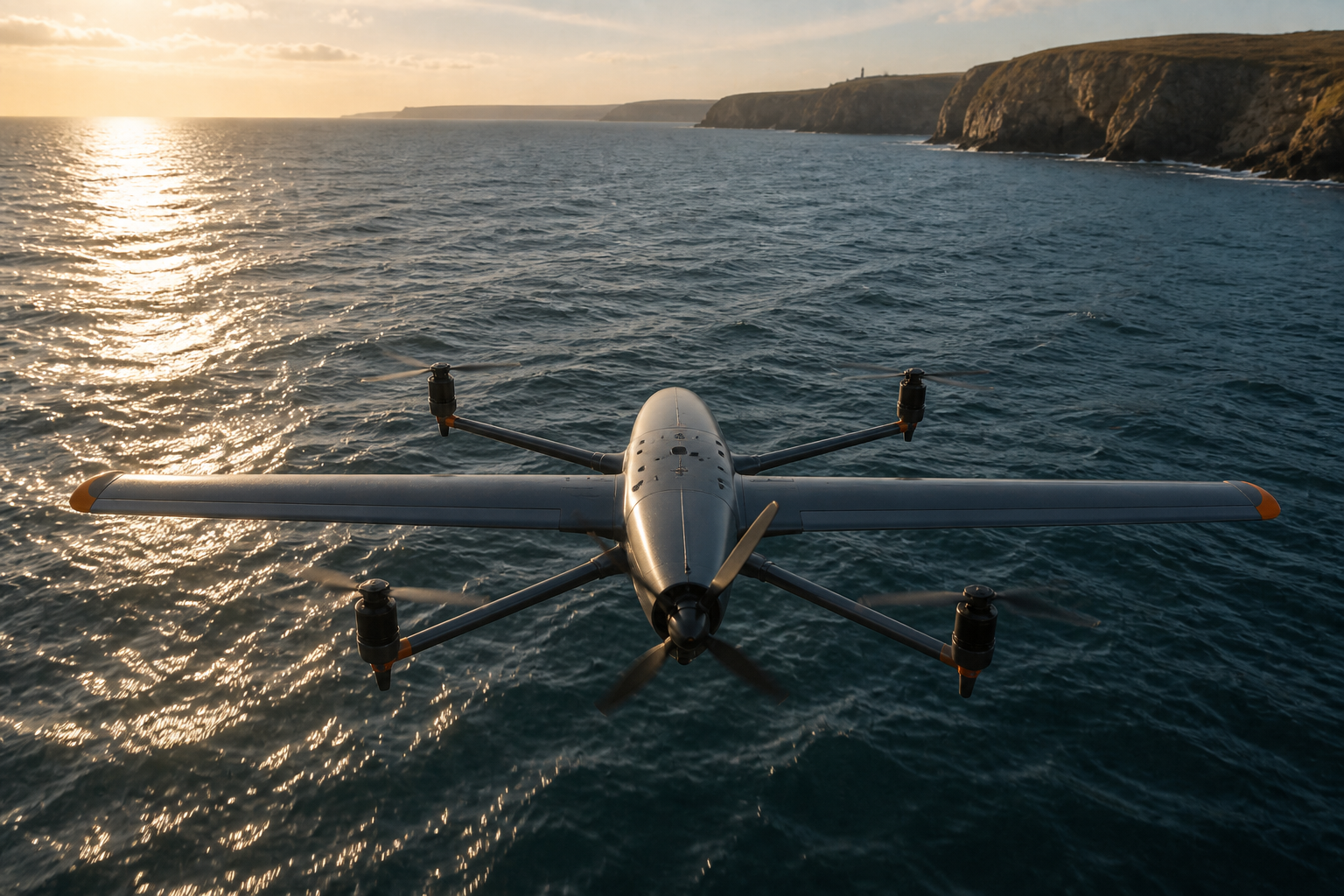
The gap in ocean monitoring has never been sensors — it is revisit rate. Patrol boats are slow and expensive; satellites pass infrequently and see through clouds poorly. A long-endurance UAV flying the same coastal route every day closes that gap.
- A single fixed-wing sortie covers hundreds of kilometers of coastline or a full nearshore fishing zone
- Daily revisits catch what matters: illegal fishing gear, discharge plumes, new coastal construction
- Low-altitude imagery resolves what satellites cannot: individual vessels, gear types, slick edges
- Maritime operations demand corrosion protection and link redundancy — check IP ratings and satellite backup
Fisheries and enforcement patrol
A platform like the SkyRanger V400 flies scheduled transects over closed zones, reading vessel positions and activity with a zoom gimbal. Enforcement value comes from the pattern: the same waters, every day, with timestamped imagery that stands up as evidence.
Pollution and discharge tracking
Slicks and discharge plumes are visible from low altitude long before they reach a shoreline sampling station. Flying the coast after storms and around industrial outfalls builds the time series that source attribution needs — and thermal imaging separates warm discharge water from the ambient sea.
Shoreline change and habitat survey
Erosion, sandbar migration and mangrove health change season by season. A repeatable photogrammetry route turns those into measurable surfaces: the same route flown quarterly yields centimeter-consistent elevation models that make change quantitative.
What maritime flying demands of the platform
Salt fog attacks connectors and motors — rinse-and-inspect cycles and sealed airframes (IP43 and up) are non-negotiable. Over water there is no emergency landing site, so link redundancy and conservative battery margins are operational requirements, not luxuries.
FAQ
Can operations run beyond the shoreline horizon?
Yes, with BVLOS approval and satellite link backup. Most coastal programs operate 20–60 km offshore routinely.
What about wind over open water?
Sea-breeze cycles are predictable: mornings are typically calm, afternoons windy. Schedule sorties accordingly and check the platform's crosswind recovery limits.

