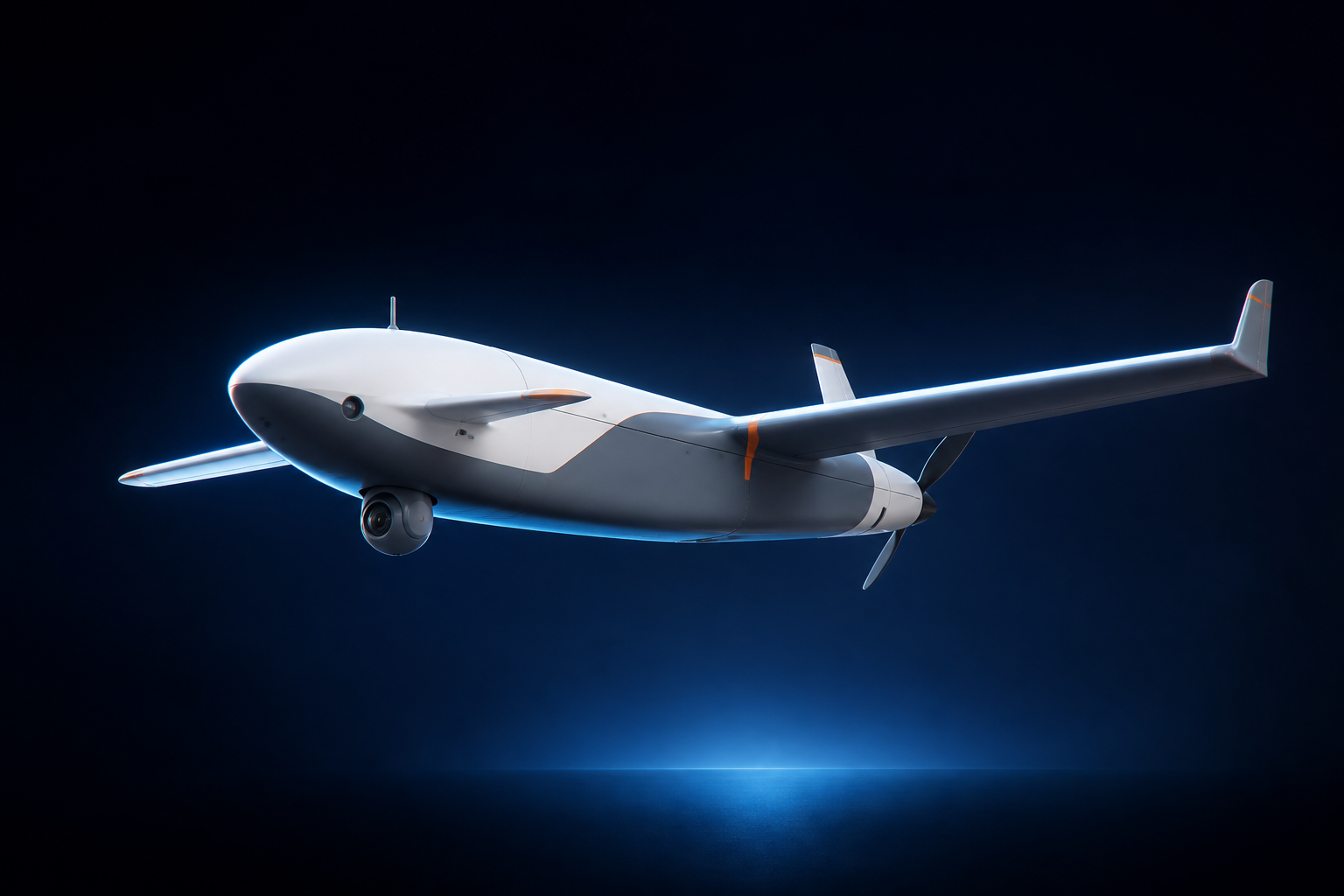
Most aircraft carry their small stabilizing surface at the tail. A canard layout moves it to the nose — and that one change rewrites the aircraft's stall behavior and cruise efficiency. It is why the SkyRanger C900 looks the way it does.
- The foreplane is designed to stall before the main wing ever can — the nose drops gently and flying speed recovers itself
- A tailplane pushes down to balance the aircraft (lift you pay for twice); a canard lifts up (lift you keep)
- Both surfaces carrying weight means a smaller main wing, less wetted area and less cruise drag
- The price: more complex pitch behavior in design and a foreplane that must never carry ice or damage unnoticed
Stall safety, built into the geometry
On a conventional aircraft, a deep stall of the main wing is the classic loss-of-control scenario. On a canard, the foreplane is set at a slightly higher incidence, so it always reaches its stall angle first: the nose drops before the main wing can stall, airspeed rebuilds, and flight continues. For an unmanned aircraft flying 10-hour missions far beyond visual range, having this behavior in the geometry rather than only in software is a genuine reliability layer.
Trim lift instead of trim drag
A conventional tailplane balances the aircraft by pushing down — meaning the main wing must lift the aircraft's weight plus that downforce. A canard balances by lifting up: both surfaces share the weight. The main wing can therefore be smaller, with less structure and less skin friction. Over a 1,200–1,500 km mission, those percentage points of drag compound into the range figures on the spec sheet.
The trade-offs designers accept
Nothing is free: the foreplane's downwash interacts with the main wing, making the design work harder to get right; flap systems are trickier to integrate; and the foreplane must be inspected carefully, because its stall margin is the aircraft's safety margin. These are engineering costs paid once, at the drawing board — the efficiency is collected on every flight thereafter.
FAQ
If canards are so efficient, why aren't all aircraft canards?
Design complexity, flap integration and field-of-view considerations keep conventional layouts dominant. Canards shine in exactly the C900's mission profile: long, steady, efficient cruise with modest maneuvering demands.
Does the layout affect payload placement?
Center-of-gravity limits are tighter than on conventional layouts, which is why the C900 uses standardized, position-fixed sensor bays.

