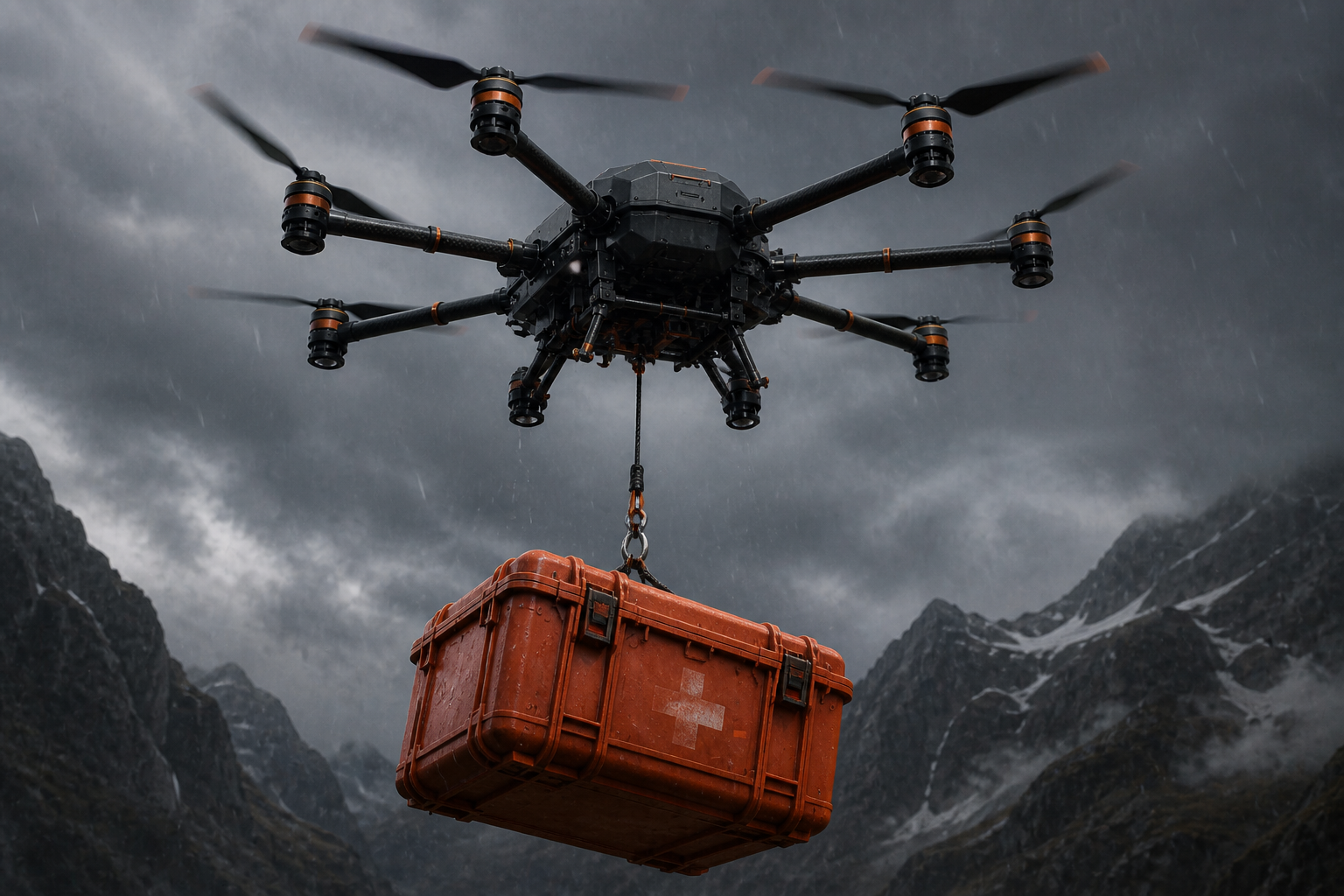
Disasters break roads first. In the critical first 72 hours, a heavy-lift multirotor like the SkyLifter H40 is often the only vehicle that can reach cut-off communities — and it does three jobs no other asset does as fast.
- Precision drops: 40 kg of medicine, food or gear delivered to RTK-accurate coordinates in minutes
- Line ferrying: carrying rescue ropes and guide lines across floodwater and collapsed terrain
- Air infrastructure: floodlights and comms-relay payloads hovering exactly where they are needed
- Quick-swap mounts mean one airframe does all three missions in the same deployment
1. Precision supply drops
Where boats are too slow and helicopters too scarce, a heavy-lift multirotor flies point-to-point over water and debris. RTK positioning drops insulin, drinking water or power banks within meters of the marked coordinate — repeatedly, in weather that grounds crewed aircraft. One aircraft flying a 5 km shuttle moves over a tonne of supplies in a day.
2. Ferrying ropes and lines
The hardest step of a swift-water rescue is getting the first rope across. A drone flies the light guide line over in seconds; rescuers then haul across the working rope. The same technique bridges collapsed bridges and ravines for telecom and power crews re-stringing cable.
3. Airborne lighting and comms relay
With a floodlight mount, the aircraft becomes a hovering light tower over a night search grid. With a relay payload, it restores a communications bubble over a valley where towers are down — often the difference between coordinated response and chaos.
What it takes to be ready
Emergency use is unforgiving: crews must train the mount swaps, pre-pack drop containers, and keep batteries stored at proper charge levels year-round. An aircraft that only flies during disasters will fail during disasters — the teams that succeed fly the same airframe on routine cargo and spraying work all year.
FAQ
How does wind affect drop accuracy?
The H40 holds an RTK hover in Force-7 winds; drops from low altitude with a winch keep accuracy within a couple of meters even in gusts.
Can it fly in rain?
IP55-rated airframes handle rain and dust. Heavy storms remain a judgment call — most agencies fly in conditions that ground light drones.

