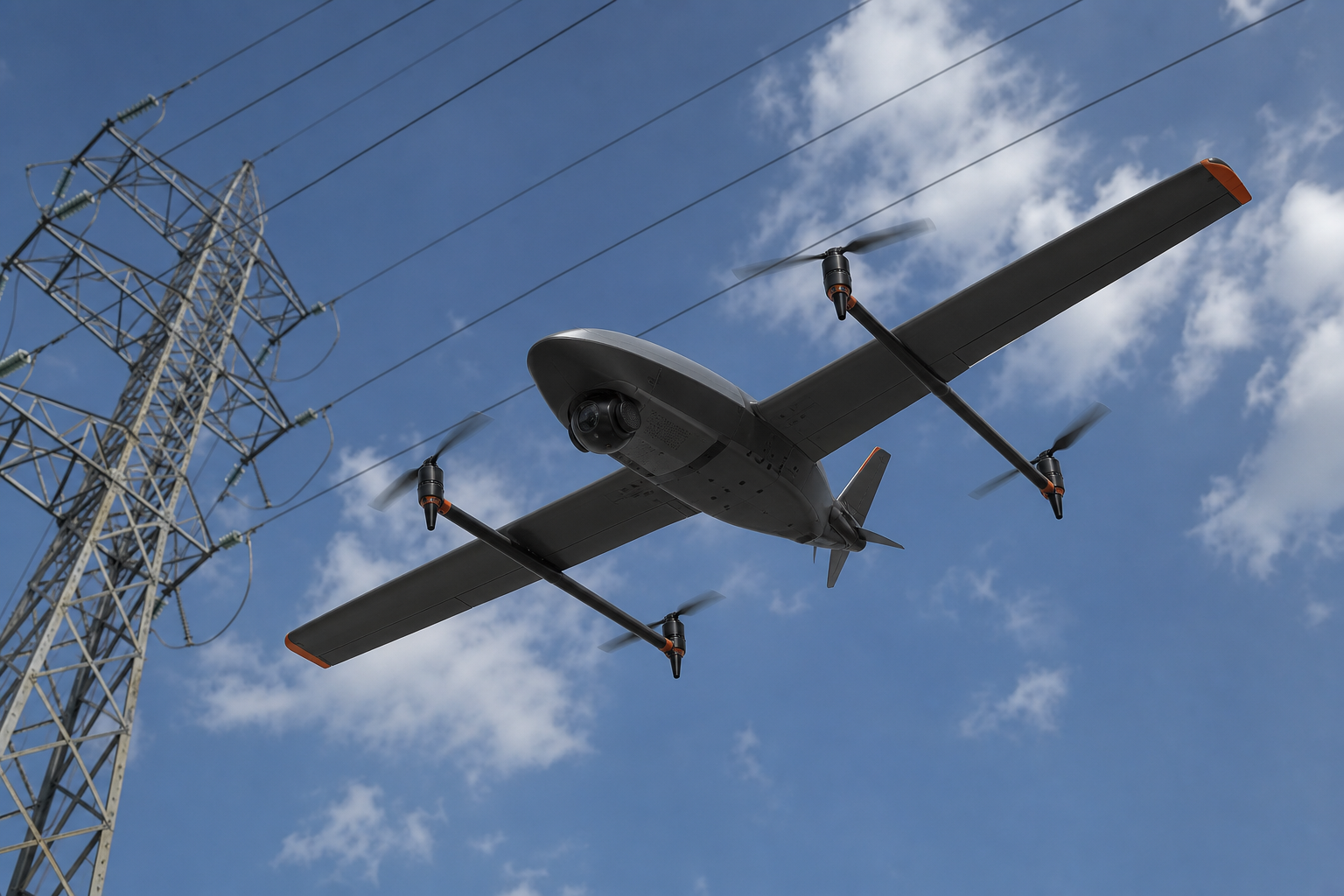
Drone powerline inspection has matured from experiments into a standard workflow. Done right, one fixed-wing sortie covers a week of foot patrol — this is the process, step by step.
- Fixed-wings fly the corridor screen; multirotors fly the close-up tower inspection — use both, in that order
- Plan routes from the tower coordinate database, offset laterally for safety, never directly above conductors
- Thermal finds the faults that matter: hot joints, degraded insulators, overloaded clamps
- The deliverable is not photos — it is a defect list with tower numbers, coordinates and severity grades
Step 1: Corridor screening by fixed-wing
A long-endurance platform like the SkyRanger V800 flies the line at 100–120 km/h with a stabilized zoom EO/IR gimbal, covering hundreds of kilometers per sortie. The goal is triage: vegetation encroachment, damaged towers, missing hardware and thermal anomalies get flagged with coordinates for the close-up pass.
Step 2: Close-up inspection by multirotor
At each flagged tower, a multirotor flies a preset orbit capturing insulator strings, clamps and dampers from fixed angles. Consistent angles matter — they let the AI comparison and the human reviewer see change over time instead of judging single images.
Step 3: Screening and the defect report
AI pre-screening removes the 95% of images with nothing to show, and an engineer confirms the rest. The report that maintenance actually uses is a table: tower number, GPS coordinate, defect class, severity, thermal reading and the evidence image. Anything less specific creates a second inspection trip.
What decides success
Three things: the quality of your tower coordinate database (bad coordinates mean bad routes), datalink continuity over valleys (plan relay or satellite backup — see the V800's link options), and crew discipline in naming and filing imagery. The aircraft is the easy part.
FAQ
How close can the drone fly to energized lines?
Follow your utility's clearance rules — typically tens of meters lateral offset for the corridor pass. Zoom optics exist precisely so you never need to get close.
Can inspection run beyond visual line of sight?
Corridor screening is a BVLOS mission by nature and requires the corresponding approvals and link redundancy. Most utilities operate under standing waivers with documented procedures.

