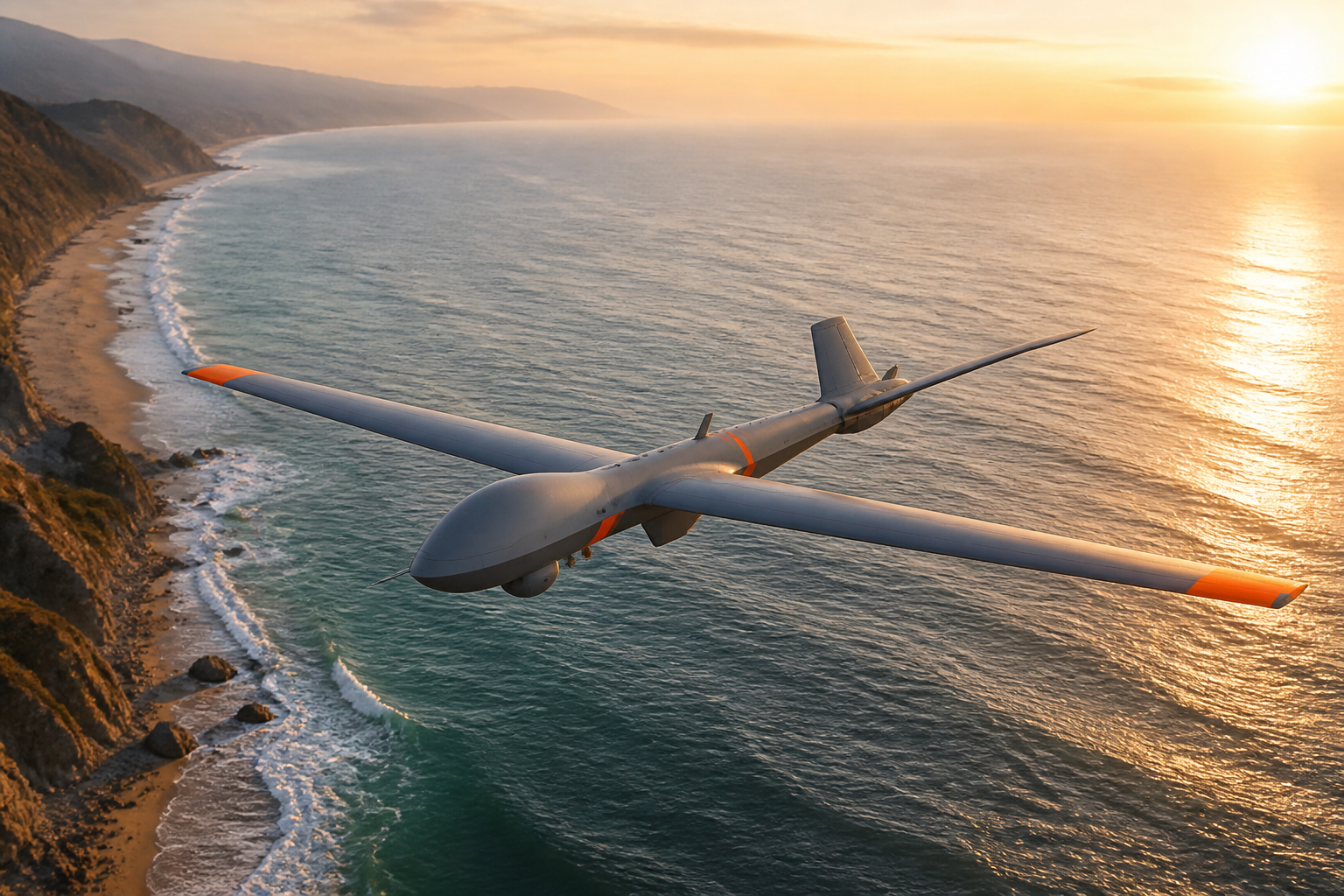
Hot, dusty regions are the hardest civilian environment a drone operates in: heat attacks the batteries and motors, dust attacks everything else. These practices come from operators flying daily in exactly these conditions.
- Schedule flights for dawn: cooler air, denser lift, calmer wind and the best thermal-imaging contrast
- Shade-store batteries and never launch a pack that is already hot to the touch; cell temperature over 45°C means standing down
- Choose sealed airframes (IP43 and up) and treat every landing in sand as a maintenance event
- Watch density altitude: 45°C air steals lift and thrust exactly when payloads are heaviest
Heat: derate and schedule around it
Lithium batteries age fast above 40°C and shed usable capacity while hot. Plan 20–30% endurance margin in summer, stage packs in a cooled box, and let the aircraft's electronics cool between back-to-back sorties. Hot air is also thin air — a loaded take-off that is comfortable at 25°C can be marginal at 47°C, so recalculate payload limits for the season, not the brochure.
Dust: seal, filter, inspect
Fine dust works into motor bearings, connector pins and gimbal mechanisms. Operating rules that work: launch and recover from mats or vehicle roofs rather than bare sand; blow out (never wipe) optics and vents after each flight day; and rotate motor inspections weekly rather than seasonally. Airframes with sealed electronics bays — the IP43/IP44 ratings on the SkyRanger V400 and V800 class — exist for exactly these environments.
Wind and the midday convection problem
Desert afternoons generate thermal turbulence and dust devils that make low-altitude imaging useless and landings hazardous. The professional pattern is a dawn block and an evening block, with data processing through the midday hours. Sandstorm forecasts are a hard stop: visibility loss is instant, and abrasive dust at flight speed strips propellers and lens coatings.
FAQ
Do batteries need warming or cooling in the field?
Cooling. Insulated boxes with cold packs keep spares near 25°C; a pack that sat in a closed vehicle at 60°C should not fly that day.
How often should filters and seals be replaced in dusty operations?
At half the manufacturer's standard interval. Dust operations roughly double the wear rate on everything that moves or seals.

